- Home
- Venice Holidays
- Venice Travel Guide Insider Tips
| Venice Travel Guide Insider Tips for a Stress-Free Visit
Venice travel guide insider tips because; Last June, a family of four spent an extra €120,- on water taxis simply because they didn't understand the vaporetto pass system.
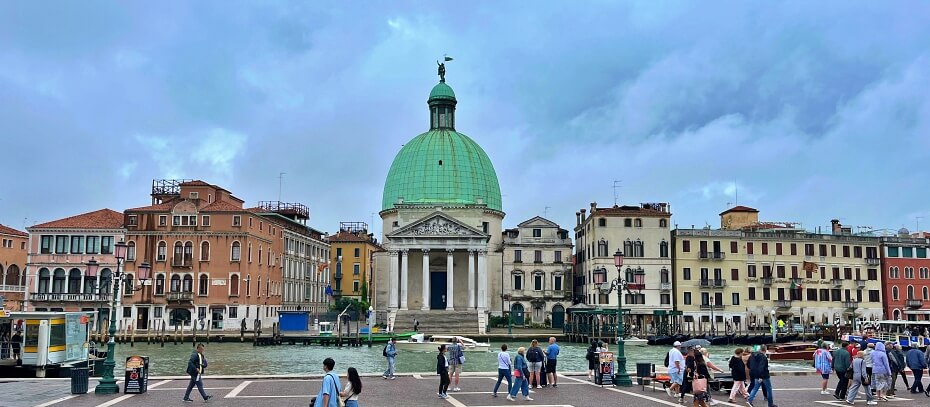
Key Takeaways
- Navigate the mandatory Venice Access Fee (Contributo di Accesso) with our clear breakdown of who must pay and how to register for a legal entry.
- Master the lagoon's transport network by choosing the right vaporetto routes and airport transfers to keep your journey efficient and cost-effective.
- Identify the ideal base for your stay in Venice by exploring the unique
character of the six historic sestieri.
- Eat like a local by mastering the art of the traditional cicchetti crawl and learning to spot the subtle red flags of overpriced tourist-trap restaurants.
- Use this Venice travel guide insider tips resource to ensuring you stay one step ahead of the city's unique logistics.
This Venice travel guide insider tips article ensures you don't become part of that statistic. Not sure where to stay? This quick overview helps you choose the right area in less than a minute.
It's easy to feel overwhelmed by the floating city's logistical hurdles, especially with the Contributo di Accesso rules now in full effect on 54 designated peak days.
You likely already know that Venice is as complex as it is beautiful, and the fear of being overcharged for a €90,- gondola ride or getting lost in the sestieri is a valid concern for any traveler.
Well i'm here to help you by providing you with the exact logistical hacks needed for a seamless journey.
You'll learn how to navigate the entry fee system without stress, which transport passes actually save you money, and where to find the quietest corners of the lagoon.
This guide breaks down everything from booking your €5,- entry QR code to securing fast-track entry at St. Mark's Basilica, giving you the confidence of a local.
| Navigating Venice in 2026: Beyond the Tourist Brochures
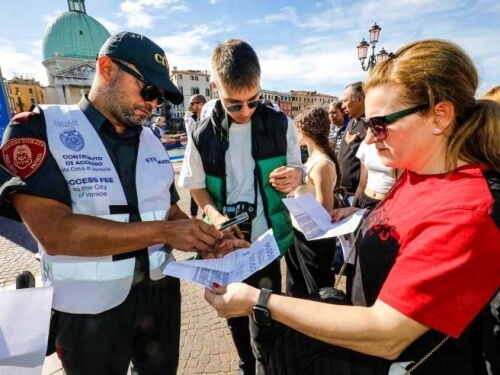
These Venice travel guide insider tips
focus on the major shifts happening right now. The city is actively
managing its crowds through new digital systems and entry requirements
that didn't exist a few years ago.
Timing is everything. The city has designated dates where crowds are expected to peak. Mostly during weekends in the spring and summer season.
Planning your arrival outside these windows is the most effective way to ensure a stress-free experience. If you must visit during a peak period, preparation is a good thing to do. The Venice Access Fee Explained
To truly understand the History and layout of Venice, you've got to look past the postcard views of the Rialto Bridge and explore the city's complex logistics.
Venice Travel Myths vs. Reality
Many travelers fear getting lost in the narrow calli. Reality check: getting lost is actually the goal, but you won't be stranded. Use Google Maps as a backup, but keep in mind that GPS signals often bounce off the high stone walls, causing a 5-10 meter margin of error.
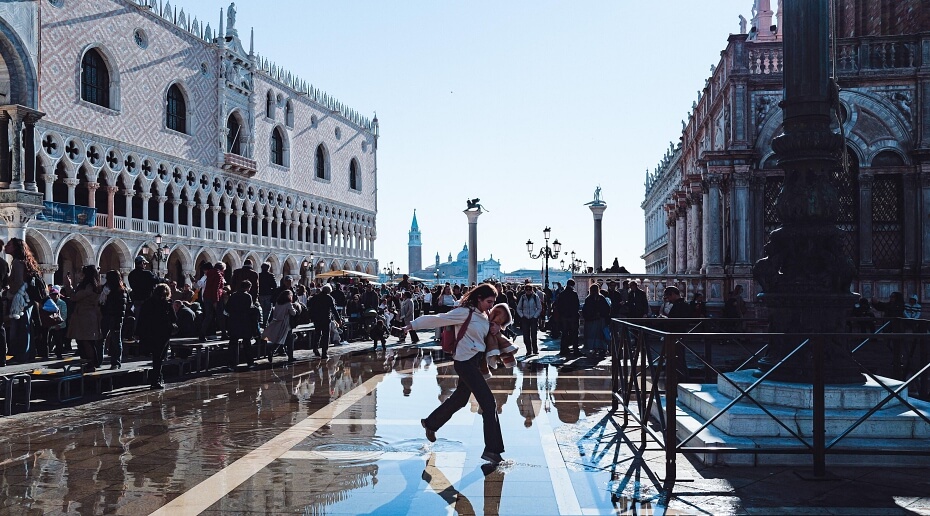
Another common myth is that the city is constantly underwater.
While Acqua Alta (high water) occurs, it's usually limited to
the winter months from October to January and the lower part in the city (San Marco Square). You can check real-time tide
apps like "Hi!Tide Venice" for 24-hour forecasts.

Venice Inside recommendations:
Traditional Islands Boat Tour | Premium Skip-The-Line Entrance | Classic Gondola Ride
| Vaporettos, Water Taxis, and Walking Hacks
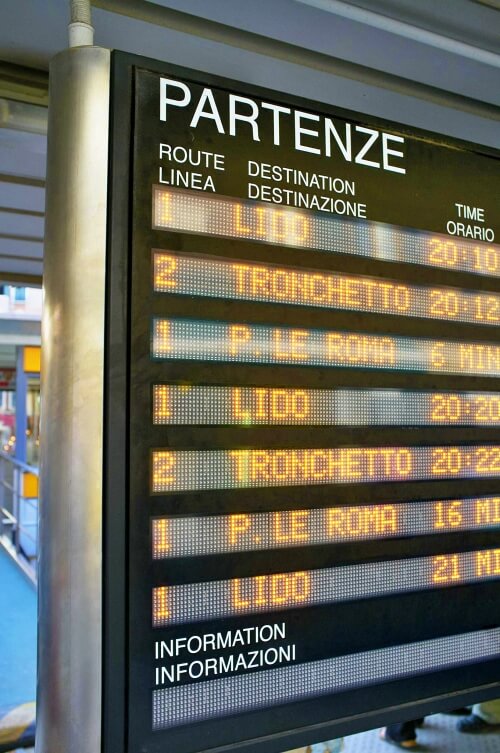
Navigating a city built on water requires a shift in mindset. You won't find cars or buses here; instead, the Venice transportation system relies on a complex network of boats and narrow footpaths.
How to Use the Vaporetto Like a Local
- Buy your passes ahead of time: Purchase your ACTV passes online to avoid the long queues at the Hellovenezia ticket booths. A single 75-minute ticket costs €9.50, but 24-hour or 48-hour passes offer much better value for frequent travelers.
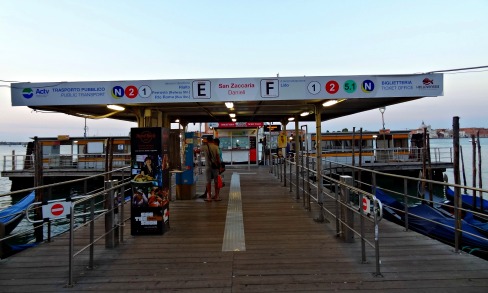
- Verify the pier: Each imbarcadero (stop) often has multiple piers. Look at the digital screens to ensure you're heading in the right direction, such as toward San Marco or the Ferrovia.
- Always validate: You must tap your ticket against the green and white scanners before boarding. This is mandatory every single time you get on. Failing to do so can result in an immediate €50,- fine, plus the price of the ticket.
- Clear the gates: Move immediately to the center of the boat once you board. Blocking the boarding area is a quick way to frustrate locals commuting to work.
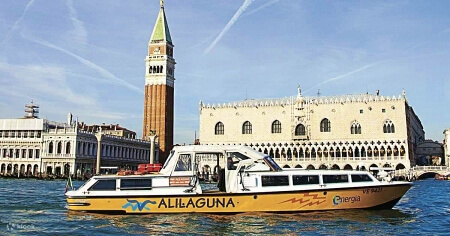
Airport Transfers: Marco Polo to the Lagoon
Getting from Marco Polo Airport to your hotel is your first logistical test. The Alilaguna water bus is the most common choice, with Blue, Orange, and Red lines serving different sestieri for approximately €15,-. If you're staying near the Rialto Bridge, the Orange line is your best bet.
For those traveling in a group of 4 to 6 people, a private water taxi is often worth the €120 to €150 price tag. It provides a direct, door-to-door service that saves you from hauling heavy luggage over endless stone bridges.
If your accommodation is near Piazzale Roma, the ATVO express land bus is the fastest and cheapest option at just €10.
One of the best Venice travel guide insider tips involves the traghetto. These are large gondolas used by locals to cross the Grand Canal at points where bridges are far apart. For just €2,-, you can enjoy a short gondola experience while crossing from spots like San Tomà or Santa Sofia. It's a functional, authentic way to save your legs and your budget.
For more detailed maps and route suggestions, you can readmy article about Transportation in Venice.
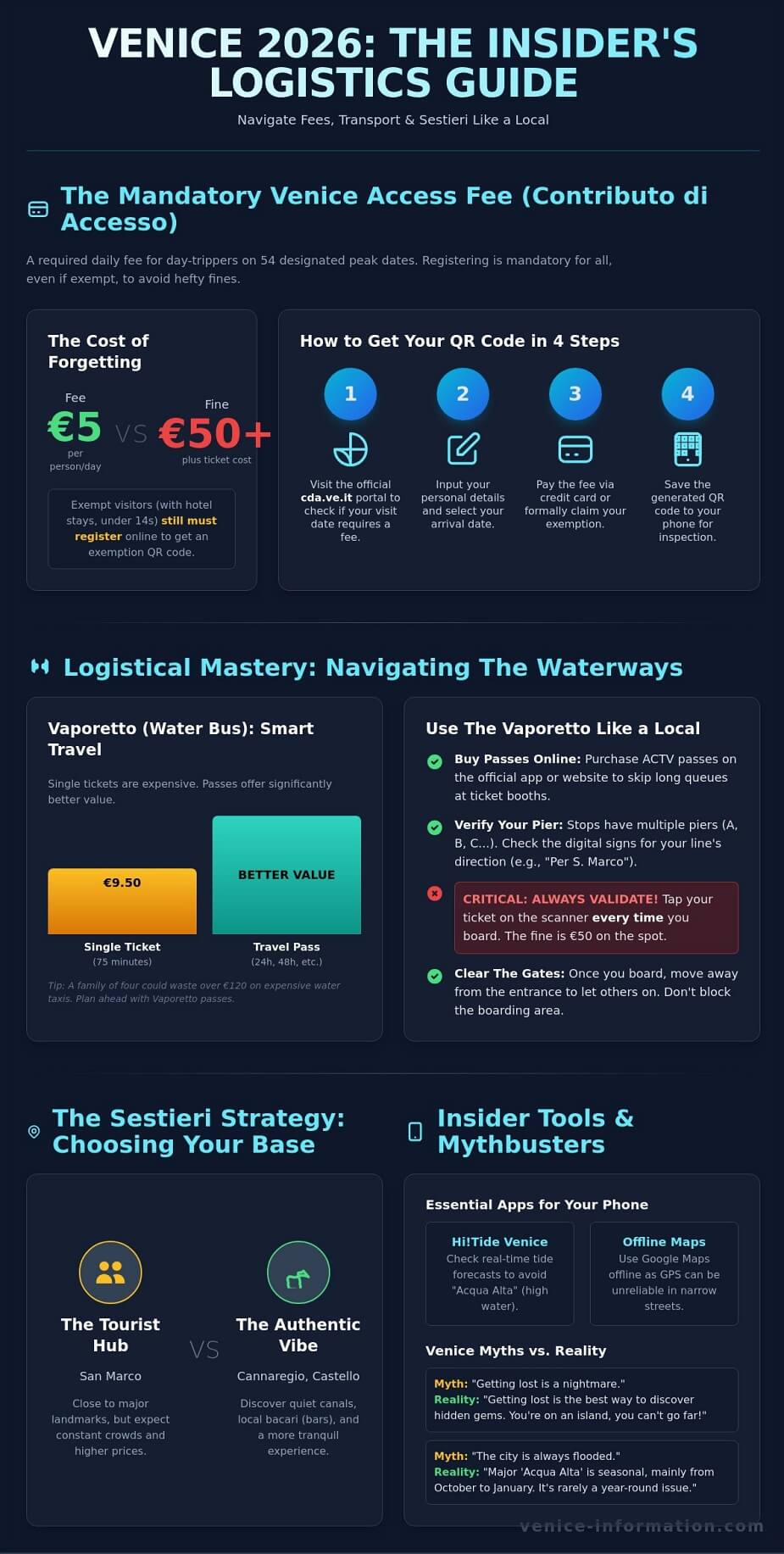
| Choosing Your Perfect Base with my Venice travel guide insider tips
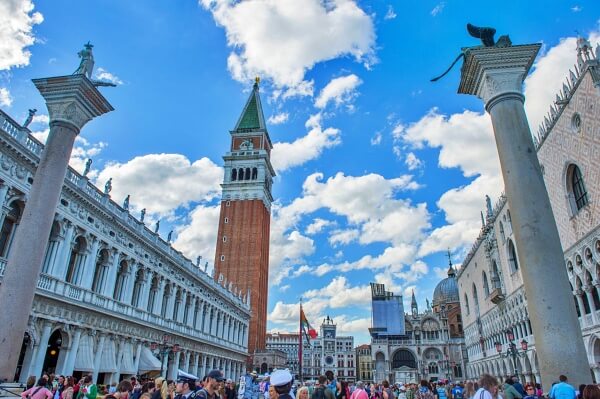
Venice isn't a single, uniform destination. It's a complex puzzle of six historic districts known as sestieri. Your choice of neighborhood dictates your daily rhythm, your dining options, and how many of the city's 400 bridges you'll cross before breakfast.
As a protected UNESCO World Heritage site, the city maintains a delicate balance between its ancient infrastructure and modern tourism. Following our Venice travel guide insider tips means picking a base that aligns with your mobility and interests.
San Marco is the undeniable heart of the action. You're steps away from the Basilica and the Doge’s Palace, but you'll share the pavement with thousands of day-trippers. Expect to pay a 25% premium on everything from espresso to souvenirs.
If you prefer a quieter experience, Cannaregio and Castello are where the remaining 49,000 residents live. These areas offer wide fundamente (canal-side walkways) and authentic osterie where a glass of wine costs €1.50.
Dorsoduro serves as the city's artistic soul. It's home to the Peggy Guggenheim Collection and provides the most spectacular sunset views along the Zattere promenade.
Neighborhood Comparison
Where to stay in Venice?
Not sure where to stay? Venice may look small, but each neighborhood feels completely different. Use this quick guide to choose the area that fits your trip in less than a minute.
San Marco
Best for: first-time visitors
Iconic, central and always lively.
Cannaregio
Best for: local experience & better prices
Authentic, quieter and still vibrant.
Castello
Best for: peace & quiet
Residential, calm and less touristy.
Dorsoduro
Best for: art & atmosphere
Creative, relaxed and charming.
San Polo
Best for: food & central location
Lively, compact and convenient.
Santa Croce
Best for: easy arrival & transport
Practical, quieter and well connected.
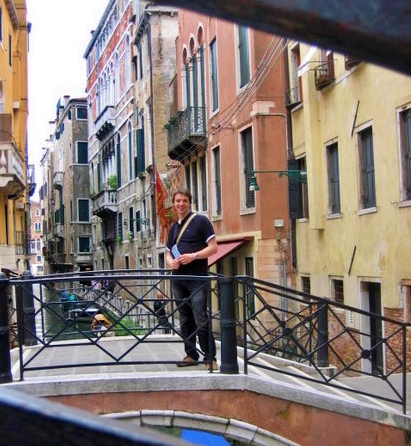
San Polo is the smallest sestiere but packs a punch for food lovers. It's the site of the 900-year-old Rialto Market. You'll find the best cicchetti (Venetian tapas) here.
Santa Croce is the most practical choice for logistics. It's the only district with a bus terminal at Piazzale Roma, making it ideal for those arriving late by car or plane.
Accommodation Insider Tips
Venetian architecture is historic, which often means "no elevator." Always check the floor level of your rental. Carrying a 20kg suitcase up three flights of steep, narrow stairs is a logistical nightmare you want to avoid. Look for "piano terra" (ground floor) or verified elevator access in the listing descriptions.
The "Canal View" is a dream for many, but it typically adds a €100 to €200 premium to your nightly rate. Before booking, decide if that view is worth the cost of two high-end dinners. Often, a room facing a quiet internal courtyard provides a much better night's sleep away from the morning vaporetto noise.
For a more detailed breakdown of specific properties, read our full article on Where to Stay in Venice: These Venice travel guide insider tips help you spend your budget on experiences rather than just a window view.
| Venetian Dining & Culture: How to Eat and Explore Like a Local
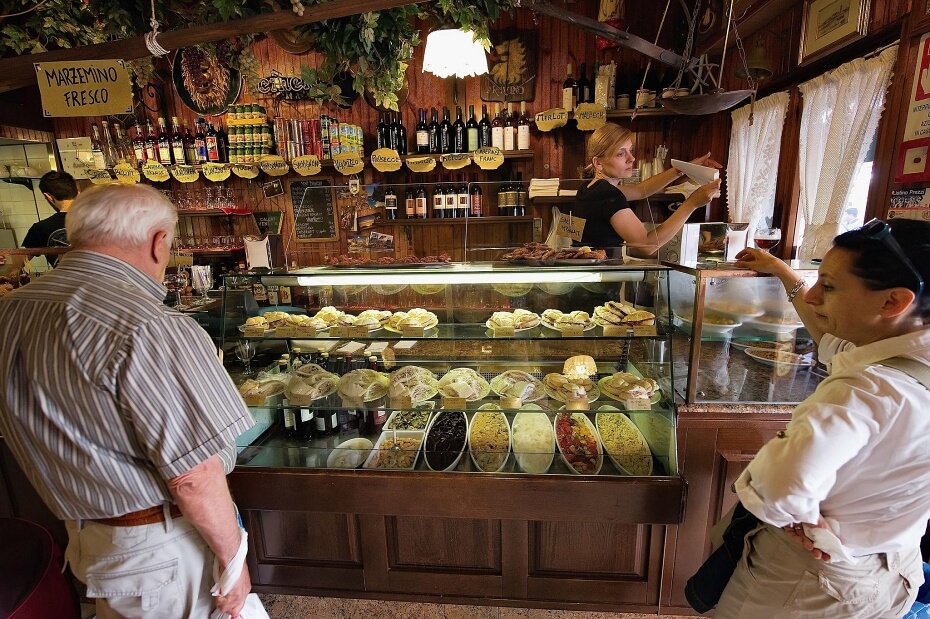
Venice is a city where eating like a local requires a shift in mindset. You won't find the best flavors in restaurants with multi-language picture menus or hosts shouting on the sidewalk. These "Tourist Menus" often result in frozen meals and 25% service surcharges. Instead, look for small, crowded spots called bacari.
This Venice travel guide insider tips section focuses on the cicchetti crawl, which is the heart of Venetian social life. It involves moving from one bar to another, enjoying small bites and a glass of wine while standing among the locals.
The Art of the Venetian Bacaro
Order an ombra, a small glass of local wine that usually costs between €1.50 and €2.50. Pair it with cicchetti, the Venetian version of tapas. To eat like a true resident, look for these specific favorites:
- Baccalà mantecato: Creamy whipped cod served on bread or polenta.
- Sarde in saor: Sardines marinated with onions, pine nuts, and raisins.
- Polpette: Savory fried meatballs that vary by recipe in every bar.
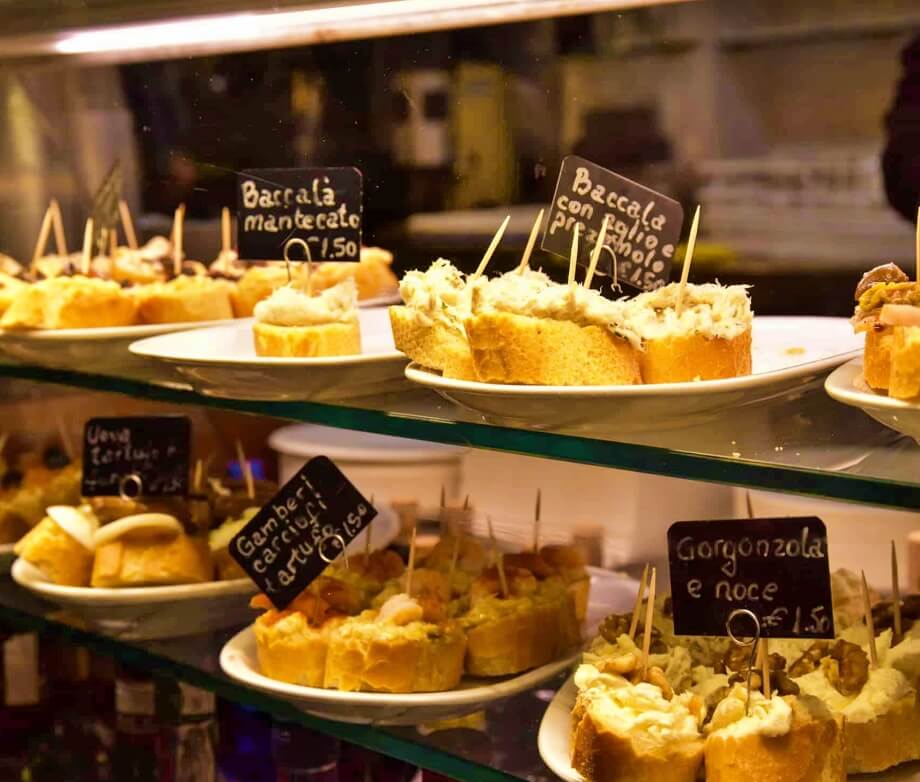
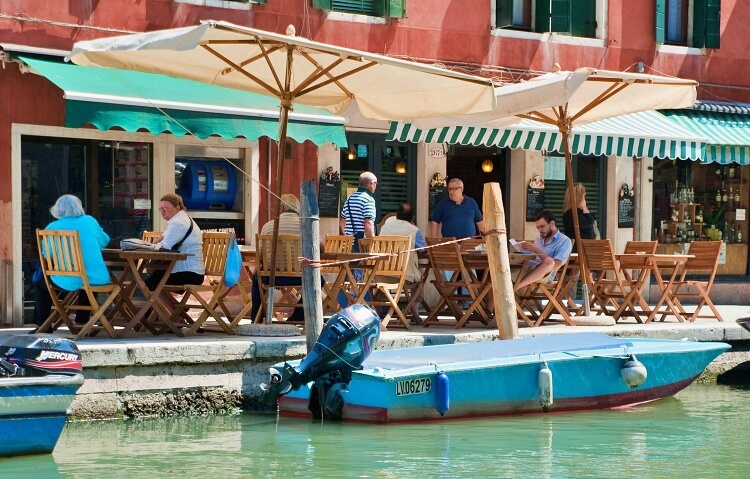
Visit the San Polo district for historic spots like Cantina Do Mori, or head to the Cannaregio sestiere. Always stand at the counter if you want the local price. Sitting at a table often triggers a "coperto" or cover charge and higher service fees, which can double your bill for a single coffee or snack.
Major Landmarks: Skip-the-Line or Miss Out
Spontaneity is difficult in modern Venice. If you want to experience the Doge's Palace "Secret Itineraries" tour, you must book 60 days in advance; these tickets frequently sell out within hours of release.
For St. Mark's Basilica, security is exceptionally strict. You cannot enter with large backpacks, and shoulders must be covered at all times. Staff turn away approximately 15% of visitors daily for dress code violations.
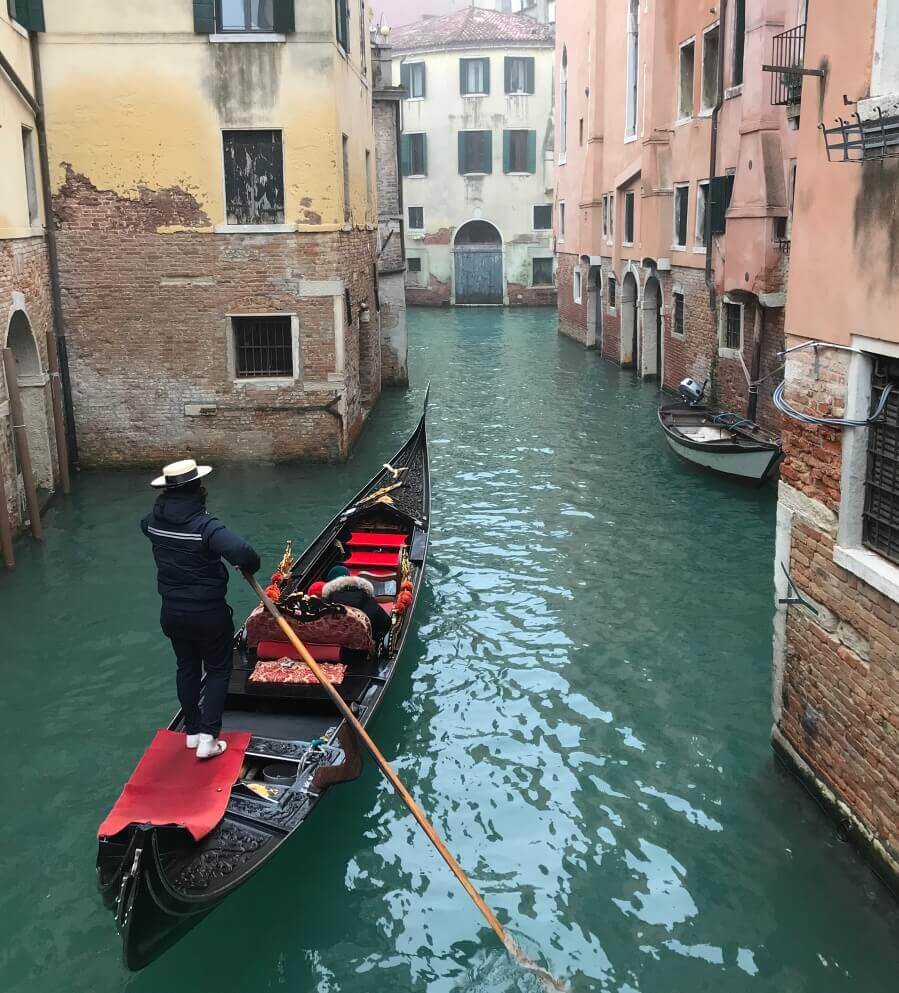
Official gondola rates are set by the city at €90,- for 30 minutes during the day in 2026. Negotiate your route before you board to ensure the gondolier takes you through the quiet side canals rather than just the crowded Grand Canal.
To navigate these bookings and find the best hidden bars, download our complete PDF guide.
| Planning Your Stress-Free Visit: Essential Tools & Expert Advice
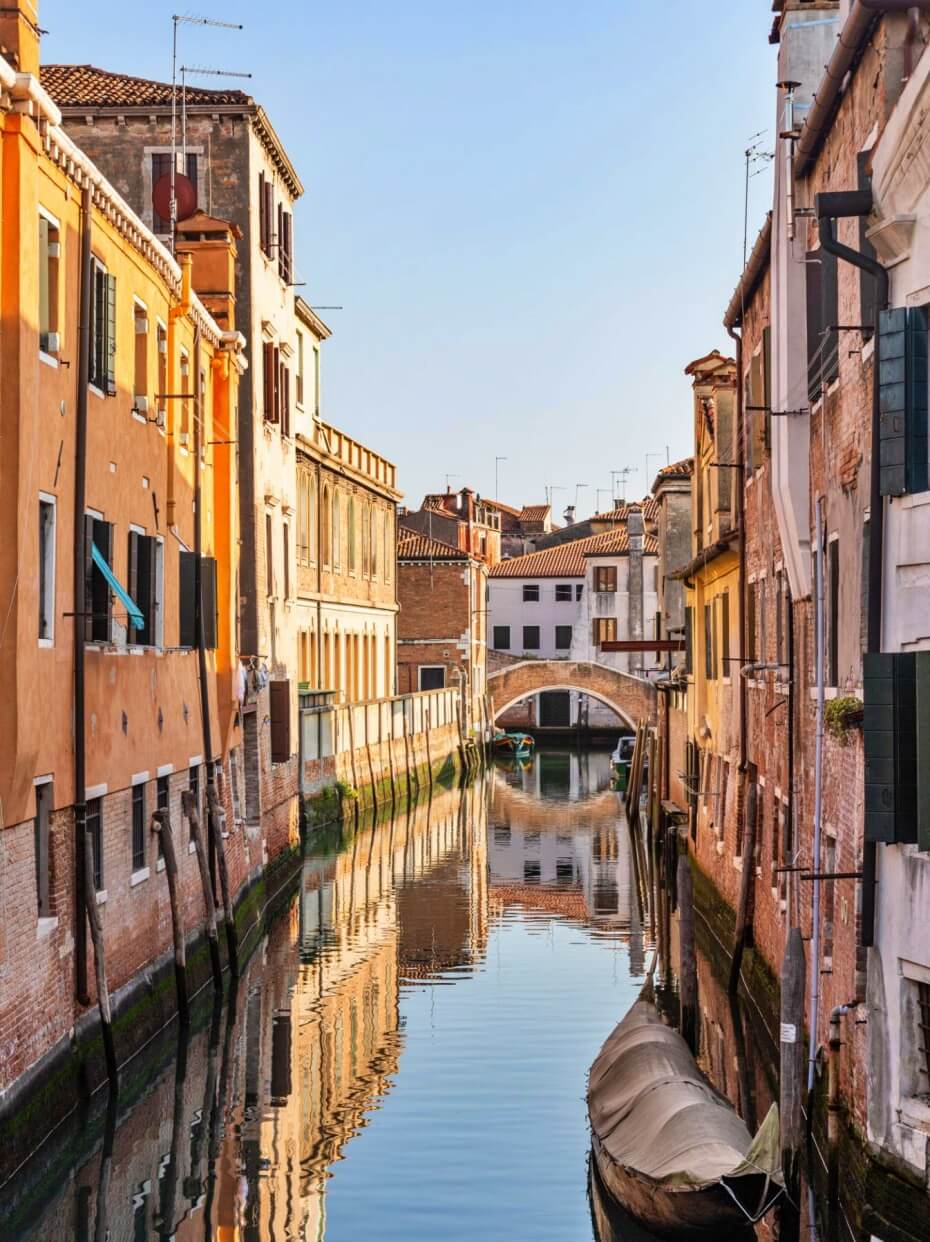
Venice is a city built on 118 islands, which makes logistics different from any other destination. You'll spend most of your time on your feet, crossing many of the city's 400+ stone bridges. Your primary asset is a pair of high-quality, broken-in walking shoes.
Avoid packing brand-new footwear or thin-soled sandals. The uneven Istrian stone pavements can lead to fatigue quickly if you aren't prepared for the 10 to 15 kilometers of walking most visitors average daily.
Digital tools are your second most important resource. The narrow, winding calli often block GPS signals, making live navigation unreliable. Before you leave, download offline maps of the various sestieri. Install the "Hi!Tide Venice" app to monitor sea levels, especially if you visit during the acqua alta season between October and March.
For transport, use the official AVM Venezia app. A single 75-minute vaporetto ticket now costs €9,50, so purchasing a 24-hour or 48-hour travel card for €25 or €35 is a smarter financial move for most travelers.
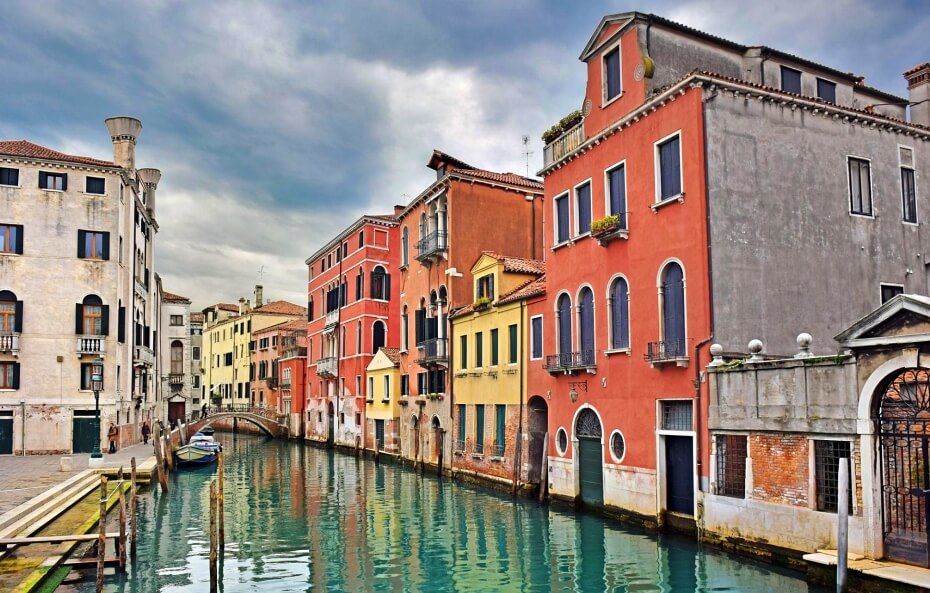
Generic itineraries often funnel tourists into the same three-block radius around San Marco at peak hours. These Venice travel guide insider tips recommend a custom approach instead. A personalized plan allows you to visit popular sites like the Rialto Bridge at 7:00 AM before the crowds arrive, leaving your afternoons free for the quiet gardens of Castello or the artisan workshops in Cannaregio. This strategy ensures you experience the lagoon's magic without the stress of heavy foot traffic.
Your final 24-hour checklist should include three specific actions. First, confirm the exact vaporetto stop for your hotel and check if they offer a private pier for water taxis. Second, download your digital tickets for the Doge's Palace or St. Mark’s Basilica to avoid the standby lines that often exceed two hours. Finally, ensure your mobile devices are fully charged and your offline guides are saved locally.
Download Your Venice Walking PDF Guide
Our comprehensive PDF guide is designed to be your digital concierge. It contains curated maps, direct skip-the-line links for major attractions, and a hand-picked list of authentic sights. Because it's a downloadable file, it remains fully functional even when your data connection drops in the depths of the city. Get the Ultimate Venice Walking PDF Guide here.
Bespoke Travel Consulting
If you're managing a complex trip, such as a multi-generational family reunion or a milestone honeymoon, our consulting service removes the guesswork. We provide Venice travel guide insider tips tailored to your specific mobility needs and interests. We’ve helped over 500 travelers navigate the complexities of lagoon logistics, from private boat transfers to accessible routes. Book a personalized Venice consulting session.
| Start Your 2026 Venetian Adventure with Confidence
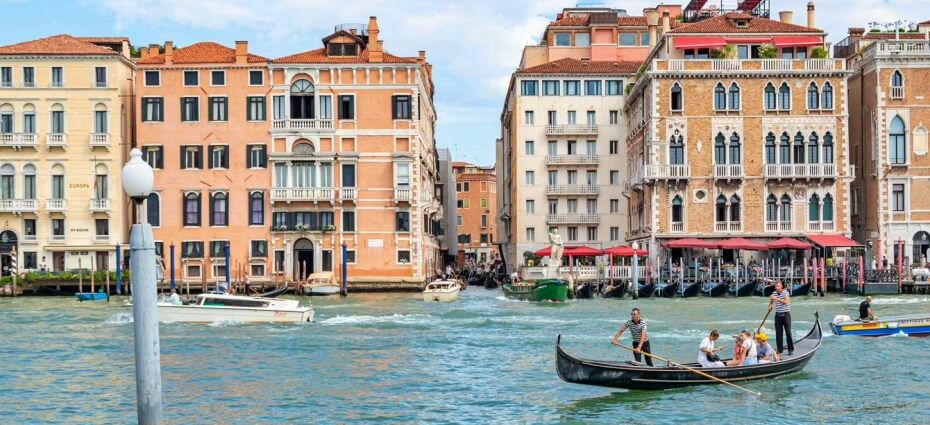
Venice remains one of the most enchanting cities on earth, but success in 2026 requires more than just a paper map. You've learned how to master the vaporetto lines and why selecting the right sestiere is the foundation of a stress-free stay. By avoiding the 15€ tourist traps and embracing authentic local bacari, you'll experience the lagoon's true soul.
Navigating these historic canals doesn't have to be overwhelming when you have the right data. Every bridge and alleyway tells a story, and you're now equipped to find the ones most travelers miss.
Venice-Information.com was founded by expert Rudmer Hoekstra, who brings over 10 years of local lagoon experience to every recommendation. We've already helped thousands of annual visitors navigate complex city regulations and transport logistics. We look forward to welcoming you to our historic city soon.
| Frequently Asked Questions
Do I need to pay the Venice Access Fee if I am staying in a hotel?
You don't pay the €5 Venice Access Fee if you have a confirmed reservation at a hotel within the historic center.
While you're exempt from the daily entry fee, you must still register on the official municipal portal to obtain a QR code for your stay.
This exemption exists because overnight guests already contribute to the city via the mandatory tourist tax collected by your accommodation. It's one of the essential Venice travel guide insider tips for staying compliant with local laws.
How much does a vaporetto ticket cost in 2026?
A single 75-minute vaporetto ticket is projected to cost €9.50 in 2026 based on current ACTV pricing trends. If you plan on taking more than three trips a day, it's smarter to purchase a 24-hour pass for €25 or a 72-hour pass for €45. These digital passes allow for unlimited travel across the lagoon and provide a hassle-free way to explore distant islands like Burano or Torcello without buying individual tickets.
Is it better to stay in Venice or Mestre?
Staying in the historic center of Venice is the better choice for travelers seeking an authentic and enchanting atmosphere. While Mestre hotels are often 40% cheaper, you'll lose at least 40 minutes each day commuting across the Liberty Bridge. Staying in the city allows you to enjoy the sestieri after 19:00 when the crowds disappear. This gives you a private view of the canals that commuters simply never get to see.
What is the best way to get from Venice Airport to the city center?
The ATVO Express Bus and the Alilaguna water bus are the most reliable transport options from Marco Polo Airport. The ATVO bus costs €10 and reaches Piazzale Roma in exactly 20 minutes using a dedicated lane. If you prefer arriving by water, the Alilaguna costs €15 and takes about 75 minutes to reach St. Mark's Square. Both services run every 30 minutes, ensuring you won't wait long after your flight lands.
Can I use a credit card for everything in Venice or do I need cash?
You can use a credit card for 95% of your transactions in Venice, but carrying €20 in small change is still necessary. Since June 2022, Italian law requires all businesses to accept card payments regardless of the total. However, you'll need €1.50 in coins for public toilets and small shops often prefer cash for a single €2 espresso. Most "bacari" wine bars also appreciate cash for quick standing service at the counter.
What happens if there is Acqua Alta (high water) during my visit?
The city remains fully functional during Acqua Alta thanks to a network of elevated walkways called passerelle. These platforms are quickly deployed by city workers when the tide is predicted to exceed 110cm. Most flooding events only last for 2 to 4 hours during the peak of the tide. You can download the Hi!Tide Venice app to get real-time alerts and see exactly which streets will stay dry during your walk.
Is a gondola ride worth the price?
A gondola ride is worth the investment if you want to see the hidden architectural details of the city's interior canals. The City of Venice strictly regulates prices, which are currently €90 for a 30-minute daytime tour and €110 for rides after 19:00. These rates are for the entire boat, which holds up to five people. To get the most value, ask your gondolier to take you through the quiet backwaters of San Polo instead of the busy Grand Canal.
How do I avoid the biggest crowds at St. Mark's Square?
To avoid the heaviest crowds, you should plan your visit to St. Mark's Square before 09:00 or after 19:00. During peak season, more than 30,000 tourists pass through this area daily, mostly between 11:00 and 16:00. Following our Venice travel guide insider tips, we recommend booking a €6 skip-the-line ticket for the Basilica online. This simple step saves you from waiting in the sun for over 60 minutes during the middle of the day.
You have read about Venice travel guide insider tips. There is enough to explore, as you can see. Please click on the links to explore my site more...
- Home
- Venice Holidays
- Venice Travel Guide Insider Tips
Extra articles about exploring Venice Italy
Holidays in Venice Italy - Spent your Weekend in Venice
Holidays in Venice Italy? Visit this City for a Weekend full of romance. I will give you the Highlights of having a lovely Holiday in Venice.
Venice Holidays and Vacations Information.
Venice Holidays and Vacations are Great. Get the Best Advice on Cheap Venice Holidays, City Deals, and Train Holidays. Visit Lovely Venice.
The Best Things to do in Venice Italy For your City Trip
Things to do in Venice Italy, during your City Trip? Proper Preparation is a Necessity to Explore Venice. Join me and Explore Venice and its Attractions.
My Cheap Holiday to Venice was Exciting!
And Yours? Your Cheap Holiday to Venice Still has to Come? I'm an Experienced traveler to Venice. Everything for a Cheap Deal...
Book a Venice Discount Tour or Package deal I selected !
I have selected Holidays to Venice. Book your Venice Discount Tours with a well Experienced Guide. Or book a Venice discount directly from the airport.
Looking for Last Minute Deals to Venice?
Are you looking for Last Minute Deals to Venice? Then, find the Last Deals with Venice as the main Attraction. Your chance to get last-minute deals!
Travel to Venice Italy; Affordable Deals on Tours in Venice
I will show options for Travel to Venice. Affordable Deals and Tours. I'm an Expert. A person who visits yearly. So read my tips...
Venice Italy Holiday? Get tips What you Shouldn't do
Experience a Venice Italy Holiday. Undiscovered corners and cultural gems. For a better understanding of your Venice Holiday.
Why Budget Travel to Venice is quite a challenge?
It is easy to spend money here. Read how you can do Budget Travel to Venice, Italy. Tips for cheap survival in the city. How do you do that?
🐾 Bringing Dog to Venice? What You Need to Know (Experience & Tips)
Thinking about bringing dog to Venice?One important question pops up: Should you bring your dog to Venice, or is it better not to?



Hi! I’m Rudmer. As a passionate fan of Venice, I keep discovering this magical city with a smile. My motto? “Keep exploring!” ✨ With my experience, I help travelers and groups make their stay in Venice truly unforgettable.
Looking for unique Venice group tours and private experiences? Get in touch, and I can arrange for your group: I
- Exclusive hotels in Venice for groups
- Tailor-made Venice boat transfers
- Private Venice gondola rides
- Unique private concerts in Venice
- Restaurants – from fine dining to casual local spots
Start looking for a cheap place to sleep in Venice
Hi I’m Rudmer. As a passionate fan of Venice, I keep discovering this magical city with a smile. My motto? “Keep exploring!” ✨ With my experience, I help travelers and groups make their stay in Venice truly unforgettable.
Looking for unique Venice group tours and private experiences? Get in touch, and I can arrange for your group: I
- Exclusive hotels in Venice for groups
- Tailor-made Venice boat transfers
- Private Venice gondola rides
- Unique private concerts in Venice
- Restaurants – from fine dining to casual local spots
Recent Articles
-
Flights to Venice Italy: Airports, Airlines & Tips
Sep 14, 26 10:58 AM
 Planning flights to Venice Italy? Compare Marco Polo and Treviso airports, direct flights, airlines, cheaper fares and the best ways to reach Venice.
Order our Top 5 Venice mini Guide
Order our Top 5 Venice mini Guide
- What to do in Venice -




Look for a cheap place to sleep in Venice

From Venice airport to Venice…

Many Transfer options. But how to get there…? I can tell you all about it! Finding your way from the airport to Venice > Or buy your ticket via this button:
NEWSLETTER

Be smart and get a cheap parking place when you are visiting Venice Italy! Check it out!
Cheap Parking Venice near the city >
Cheap Parking near the train station (Mestre) >
1st time Venice Information? Start here:
Planning to go to Venice, Italy?
Already in Venice and time for Action?
Copyright © 2010–
About this website - Privacy - Copyright - Disclaimer - Contact - Advertise - Sitemap - Free Newsletter Subscription
By founder & author Rudmer Hoekstra, and also the author of www.NaarVenetie.com
All materials on this website are copyrighted. No part of this site may be used without prior permission for publication in other media. It is prohibited without written consent, and it is not permitted to copy information from this website or disseminate in any form whatsoever.